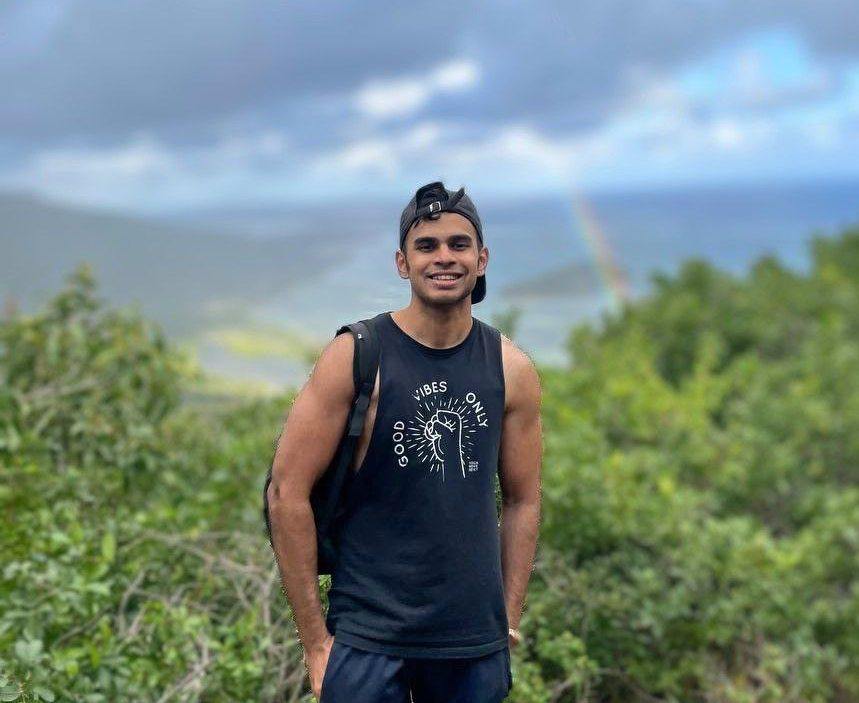
Arif Woozeer

About

Arif Woozeer

Mauritius — my parents' home, and the place that has always complicated simple questions about where I'm from.

Research Interests

I build AI systems for people who live between languages and cultures—because I've spent my whole life doing that translation work myself.

Here's the kind of problem I'm interested in: A migrant worker arrives in Singapore, needs to set up a bank account and understand employment contracts, but the financial system assumes you already speak English and understand how CPF works. Or a youth mentor trying to support someone in crisis over text, but "sia" and "walao" don't show up in any standard sentiment analysis tool, so the AI completely misses the emotional content. These aren't edge cases. For millions of people, this is the default experience—technology that doesn't understand how you actually communicate.

My recent work includes building emotion recognition systems for youth mental health support at Over The Rainbow (where I had to teach NLP tools what Singlish particles mean), multilingual dialogue systems for migrant financial literacy with Reach Alliance (figuring out how to deliver banking information across language barriers), and research on how conversational AI shapes trust when you're already navigating unfamiliar cultural contexts.

The questions I keep coming back to: How do you build AI that actually works for people who code-switch mid-sentence, or whose cultural context doesn't match the training data? When is AI genuinely helpful versus just another barrier dressed up as assistance? And who gets to decide what counts as "good enough" when the technology is being deployed in contexts that shape access to economic opportunity, healthcare, or emotional support?

I'm trying to figure out what it means to build technology that supports people across difference—linguistic, cultural, economic—rather than flattening that difference into something a model can process more easily.

Background

I've always existed between categories. Born to Mauritian parents but raised in Singapore, I grew up looking "brown" but speaking French and Mandarin — a combination that constantly confused people's attempts to place me. My NRIC, Singapore's identity card, lists my race as "MAURITIAN," a bureaucratic acknowledgment that I didn't fit neatly into the standard boxes. This third culture identity — never quite belonging to one place, always translating between worlds — has fundamentally shaped how I approach technology and human experience.

I studied Information Systems at Singapore Management University and spent a semester at University College London. My path has been varied — from co-founding a mental health tech startup, to researching conversational AI for development policy. I work across English, Mandarin, and French, which has shaped how I think about language not just as communication, but as infrastructure for access, understanding, and power.

I've lived and worked in Singapore, Beijing, and London—each place adding another layer to how I think about who gets access to what, and why language often determines the answer. This cross-cultural lens runs through my technical work: when I build multilingual AI systems or study how emerging technologies get adapted in different contexts, I'm drawing on years of personal translation work. I know what it feels like to constantly shift between languages and cultural codes, and that shapes what I notice when technology fails to account for that reality.

Current Focus

I currently work in international trade and investment, focusing on Singapore-Middle East market development. I continue research with the Reach Alliance on using conversational AI to enhance financial literacy for migrant workers, and worked as a Product & Systems Developer at Over The Rainbow, building emotion pattern recognition systems for youth well-being support.

Connect

You can reach me at arifwoozeer@gmail.com or connect via LinkedIn and GitHub.