When the Solution Stopped Being the Point
The hardest to reach are not hard to reach. They are underserved within existing systems.
Prof Joseph Wong, Reach Alliance
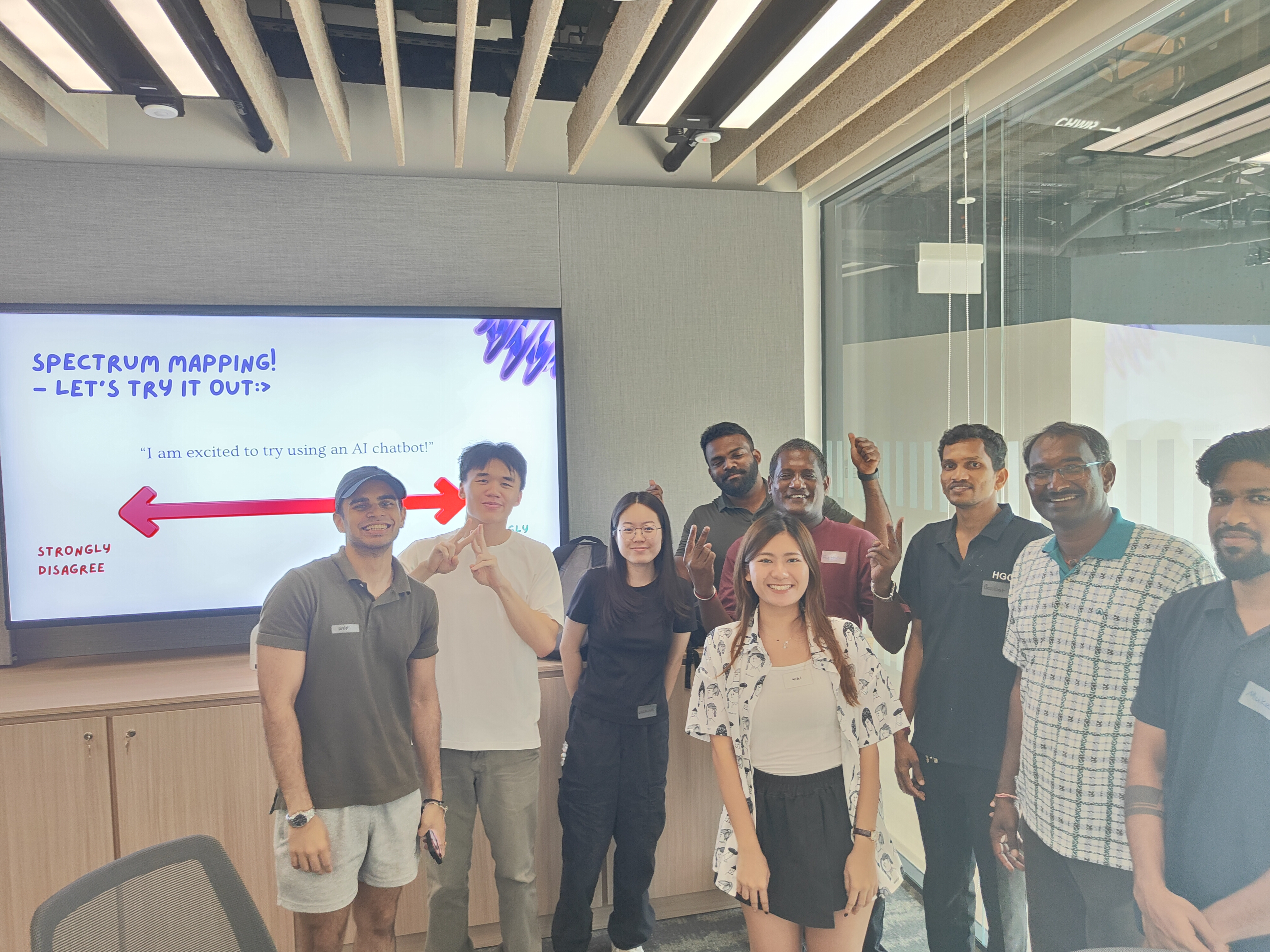
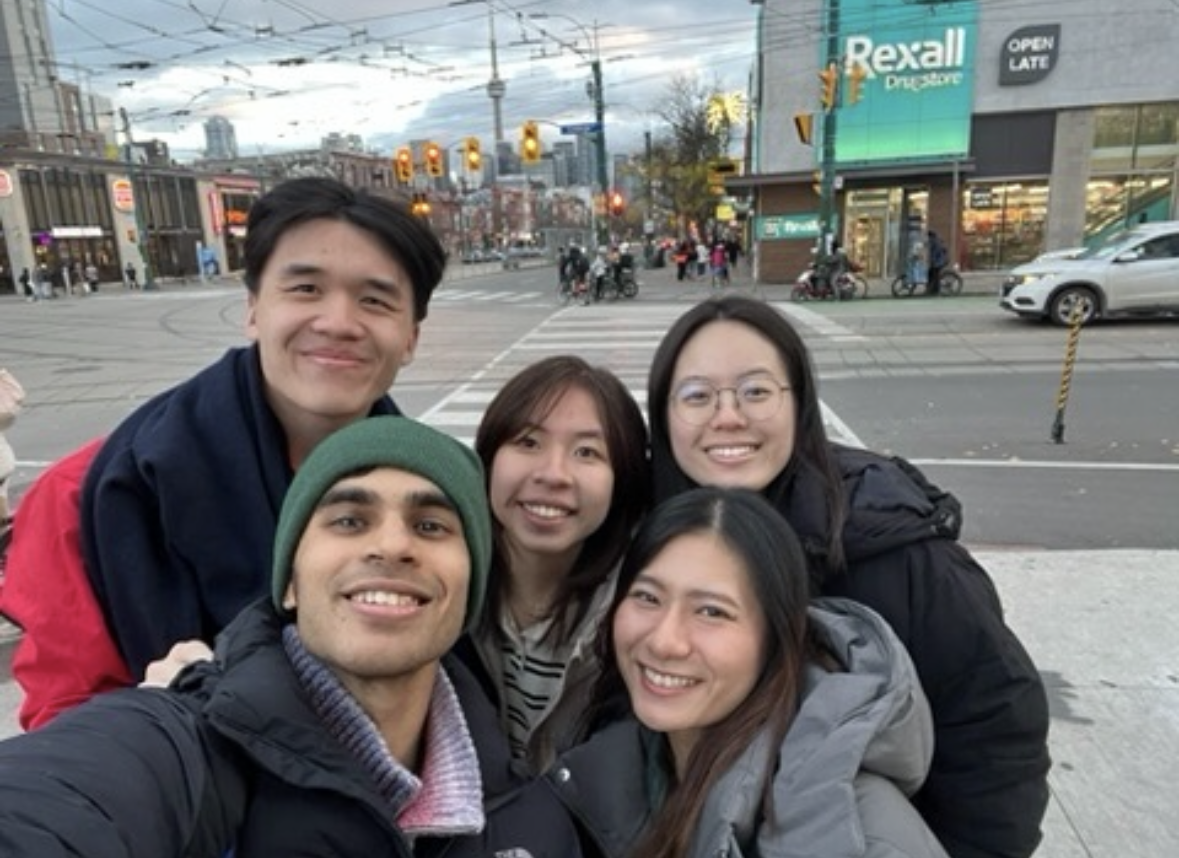
The moment I keep coming back to happened outside one of the conference venues in Toronto. It was the second or third day (I don't remember exactly) and our team had stepped aside after a long stretch of sessions. We were tired, a bit overstimulated, and a little stuck.
We'd spent months building a chatbot. We knew why we were there. We knew who we were building for. And yet someone said, almost offhandedly: "Wait, why are we building this chatbot in the first place?"
It wasn't confrontational. No one was calling the work useless. But the question hung there longer than it should have, and I remember realizing we hadn't really paused to ask it in that way before. We had been so focused on how to move forward that we hadn't stepped back to think about whether the thing we were moving toward still made sense.
That huddle outside the conference venue didn't produce a new solution. It produced something more uncomfortable: doubt. And that doubt turned out to be the most important part of the entire REACH experience for me.
Going into the project, I thought I understood what we were doing. We were designing a scalable, tech-enabled intervention to support migrant workers "achieve" financial literacy. On paper, it made sense. You find the gap, you build something, you show it works. That's how I'd been trained to think about problems.
Looking back, I can see how narrow that frame was.
Some of this was probably my own background showing. As someone trained in computing and systems thinking, my instinct is to reach for structure quickly. Frameworks feel grounding. They give you something to hold onto when the problem is messy. But over time, I started to notice how often we were trying to make reality fit the framework, instead of questioning whether the framework belonged there in the first place.
I still recall a call with Professor Dilip Soman asking if he had recommendations of a framework we could reference in our chatbot design. "Don't look for a framework, go build it." I remember the silence after he said it. Part discomfort, part relief. We'd been looking for permission to think originally, and he was telling us we didn't need it.
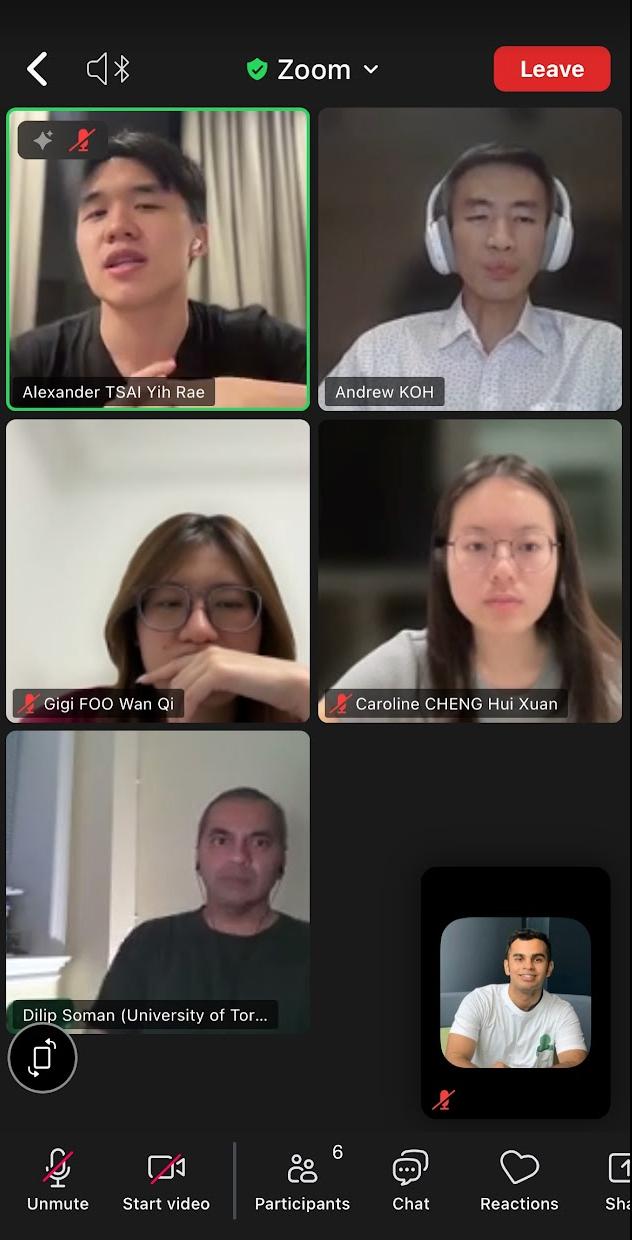
Sometimes there really isn't an existing framework, or at least not one that travels well.
That became clearer as we spent more time listening to the workers we were supposedly designing for. Not "listening" in the abstract sense, but actually paying attention to how diverse their situations were, how much knowledge they already had, and how many systems they were already navigating daily. What we saw didn't look like a population waiting for information to be delivered. It looked like people making complex decisions within constraints we hadn't fully accounted for.
Co-creation, for us, stopped being about adding features. There was so much intelligence already in the room. We just weren't capturing most of it.
Toronto made this realization clearer. Meeting other Reach teams, what struck me was how open everyone was about uncertainty. Nobody treated rethinking your approach as failure. That was just .. part of the work.
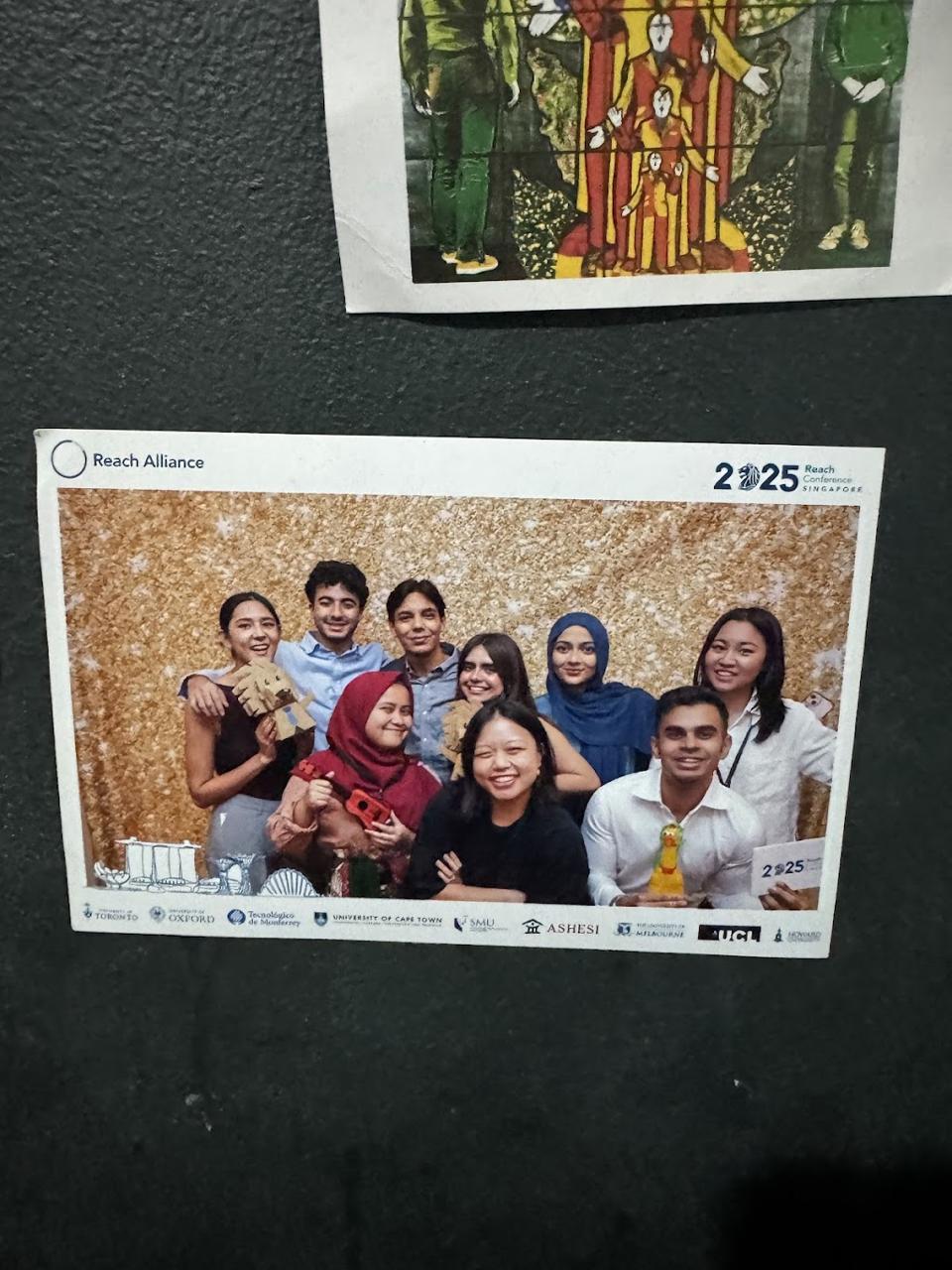
That feeling culminated during the conference at SMU marking Reach's ten-year anniversary, especially during Reach founder Joseph Wong's speech. There was one line in particular that I haven't been able to shake since:
"The hardest to reach are often not hard to reach. They are underserved within existing systems."
The framing seemed simple, but retrospectively in a deceptive way. For years, the dominant assumption had been that reaching marginalized populations was primarily a logistical problem: distance, cost, delivery. But Joseph argued that the real barriers were systemic: institutions, mental models, economic assumptions, norms. The issue wasn't access alone. It was trust.
He shared an example from Northern Ontario, where what actually worked for remote Indigenous communities was having COVID-19 vaccines administered by Indigenous physicians. Trust, built over time, mattered more than efficiency. The solution worked because it respected history rather than trying to bypass it.
Sitting there, I realized how much of our thinking, not just on this project but in general, still revolves around optimizing the wrong variables.
"We ask how to move from 50% to 70% uptake. We rarely ask how to reach the 30% who are structurally excluded."
That reframing made me look back at our own work differently. Maybe the chatbot wasn't inherently wrong. But maybe it was insufficient. Maybe what migrant workers needed was stronger legal protections, not another interface. Maybe the most meaningful interventions lived upstream: in policy, regulation, employer accountability, access to institutional support.
Those weren't things we could build in a semester. But that didn't make them irrelevant. If anything, it made them more important.
It also made me genuinely uncomfortable. Because it meant admitting that some of the most pressing problems can't be solved by the tools I know best. And maybe sitting with that discomfort matters more than reaching for the next thing to build.
Reach didn't give me a neat conclusion. It shifted how I orient myself toward problems.
Somewhere along the way I stopped thinking about solutions and started thinking about infrastructure — the kind built on trust and solidarity, and the kind that takes longer than a semester to see. I'm also leaving more suspicious of what we choose to measure in the first place.
Listening isn't the warmup before you build something. It's the actual work.
In a way, becoming a REACH researcher doesn't feel like something you finish. It feels like something you carry with you, into future projects, into whatever work comes next. And the thing I keep coming back to: you can't fix what's broken quickly if you don't first understand what's holding the system together, and who it's leaving out.
Acknowledgements
This work exists because of many people who gave their time, trust, and care long before there were any findings to share. Thank you to Professor Andrew Koh for the nomination, and guidance throughout this work; to Marin and Joseph for shaping how we think about impact, humility, and research beyond neat solutions; and to the Reach Alliance community across 2024 and 2025: students, faculty, and researchers whose generosity made this feel less like a project and more like a conversation. Most of all, thank you to the migrant brothers who welcomed us into their lives. None of this would have been possible without you.